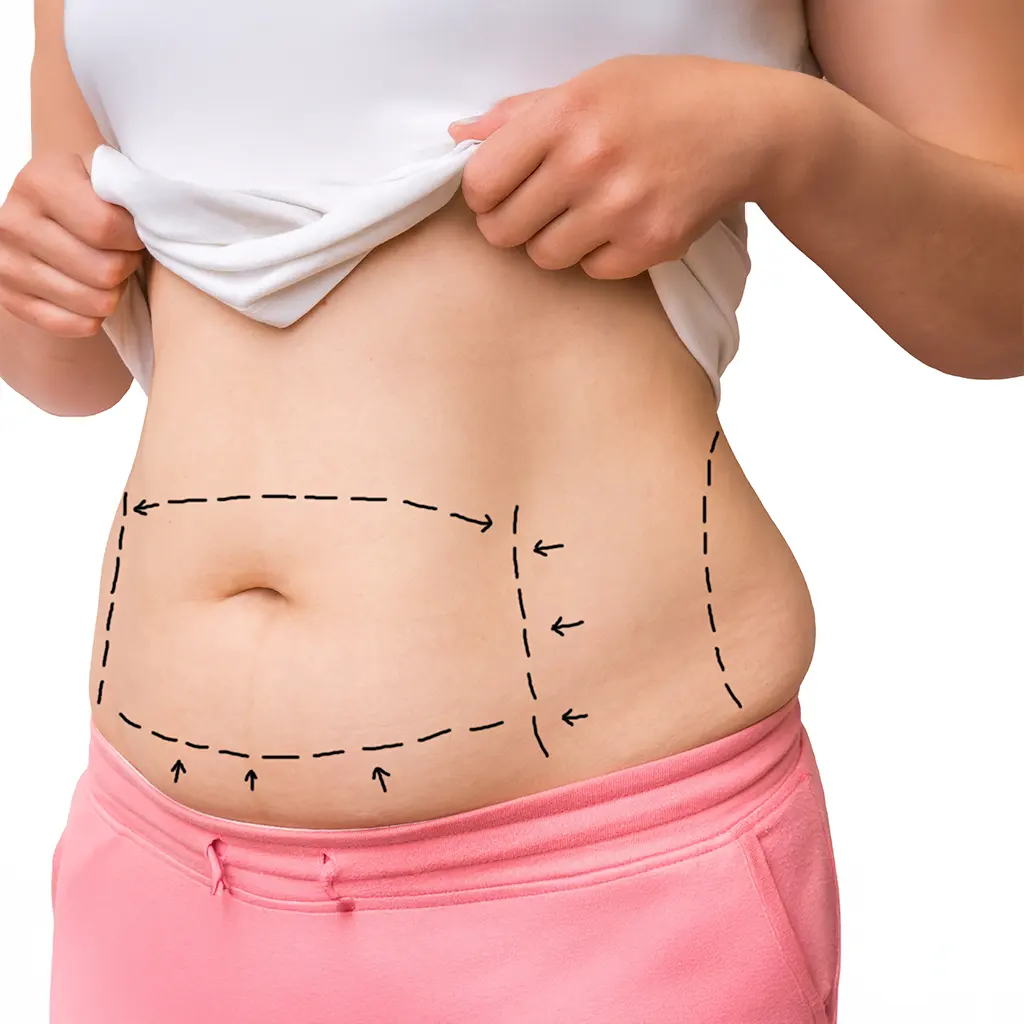
Quantum RF may help reduce mild to moderate skin laxity and allow tissues to adapt to a firmer contour in suitable patients. It aims to create a controlled thermal effect in collagen-containing tissues using bipolar radiofrequency energy delivered beneath the skin. However, in patients with significant sagging or a physically large amount of excess skin, …

Quantum RF may help reduce mild to moderate skin laxity and allow tissues to adapt to a firmer contour in suitable patients. It aims to create a controlled thermal effect in collagen-containing tissues using bipolar radiofrequency energy delivered beneath the skin. However, in patients with significant sagging or a physically large amount of excess skin, it does not replace the degree of change that can be achieved with skin-removal procedures such as tummy tuck, arm lift, or thigh lift.
The degree of tightening that may be achieved with Quantum RF varies according to the extent of laxity, skin quality, treatment area, age, previous weight changes, and accompanying excess fat. Therefore, the main question is not simply “Does it tighten the skin?” but whether the existing skin problem is at a level that can be improved with this technology.
How Does Quantum RF Tighten the Skin?
Quantum RF is a minimally invasive technology that delivers bipolar radiofrequency energy to the tissues beneath the skin through a thin probe. The applied energy creates a controlled thermal effect within the tissues.
This heating effect supports contraction of collagen fibres and may also contribute to the formation of new collagen during the healing process. The aim is to help the skin and the supporting tissues beneath it develop a firmer structure.
Because of this mechanism, the procedure should not be considered merely a treatment applied to the surface of the skin. Its effect is created by controlled heating of the soft tissues beneath the skin.
At What Degree of Skin Laxity Is It More Effective?
One of the most appropriate indications for Quantum RF is mild to moderate skin laxity. If the skin still has a certain degree of elasticity but the tissues have lost some of their previous firmness, contraction created by radiofrequency may help the contour tighten more effectively.
For example, it may be considered in patients with mild laxity of the abdomen, waist, arms, or thighs who do not have sagging significant enough to require skin removal.
The limit is important. If the skin forms folds, hangs noticeably downward, or there is a significant amount of excess skin after major weight loss, attempting to tighten the tissue alone will not eliminate the physical excess skin.
Can Quantum RF Completely Eliminate Sagging Skin?
No, not when there is significant excess skin. Quantum RF does not surgically cut away or remove skin. It aims to support contraction and remodelling of the existing tissue.
For example, if a folding apron of skin is present in the lower abdomen after major weight loss, the underlying problem is not only loss of skin elasticity; there is physically more skin than the body requires. In this situation, it is not realistic to expect an energy-based method to create the same result as surgical skin removal.
The same distinction applies to significant sagging of the upper arms or excess skin of the inner thighs. As the degree of laxity increases, the likelihood of considering lifting procedures also increases.
Why Can Quantum RF Be Used Together with Liposuction?
Liposuction reduces fat tissue but cannot directly control how much the skin will retract. When fat volume decreases, the overlying skin needs to adapt to the new body contour.
In patients with good skin elasticity, this adaptation may occur adequately on its own. However, when mild or moderate laxity is present, there may be a risk that the skin will appear looser after liposuction. At this point, Quantum RF may be used together with liposuction to support contraction of the remaining tissues.
The two procedures have different roles: liposuction reduces localised fat tissue, while Quantum RF is used to promote tightening of the skin and the supporting tissues beneath it.
Can Quantum RF Be Used on Its Own?
Liposuction is not necessary for every patient. In some patients who do not have significant excess fat but have mild tissue laxity, Quantum RF may also be considered as a standalone treatment.
On the other hand, if there is a significant amount of localised fat in the area, tightening alone may not provide the desired contour change. Likewise, if the amount of fat is low but there is severe excess skin, the degree of change achievable with Quantum RF may be limited.
For this reason, treatment selection requires separate assessment of the questions “Is excess fat present?” and “Is the skin lax?”
Can Quantum RF Be Used for Skin Laxity After Weight Loss?
The amount of weight lost and the condition of the remaining skin are the determining factors. Quantum RF may be an appropriate option for mild to moderate laxity that develops after more limited weight loss.
However, particularly in individuals who have lost a large amount of weight, the skin may have remained stretched for years. Changes in collagen and elastin structure may prevent this skin from fully adapting to the new body volume.
If pronounced skin folds have developed around the abdomen, arms, thighs, back, or buttocks, the limitations of energy-based tightening should be considered from the outset. Surgical lifting procedures may be more appropriate in some areas.
Are Quantum RF Results Visible Immediately?
Some early tightening related to thermal contraction may occur during the procedure, but the final appearance is not assessed immediately. Swelling, tenderness, and temporary tissue firmness after treatment may affect the early contour.
Collagen remodelling also occurs gradually over time. For this reason, changes in skin firmness and contour may continue to develop over weeks and months.
The degree of change is not standard either. The same level of tightening should not be expected in a patient with good skin quality and another patient with significant loss of elasticity.
Is It Applied in the Same Way to Every Area?
No. The skin of the abdomen, upper arms, inner thighs, and other body areas does not have the same thickness or anatomical structure. The amount of subcutaneous fat and distribution of laxity also vary from one area to another.
For this reason, the amount of energy applied, treatment area, and combination with liposuction when necessary are planned according to the patient’s anatomy. It should not be assumed that using more energy will automatically produce greater tightening.
Because controlled thermal treatment is required, it is important to keep tissue temperature and the treatment technique within safe limits.
Which Is More Appropriate: Quantum RF or a Lifting Procedure?
This decision should be based on the degree of laxity. In mild to moderate skin laxity, particularly when there is no large amount of excess skin requiring surgical removal, Quantum RF may be an option to support tissue tightening.
When significant sagging and excess skin are present, procedures such as tummy tuck, arm lift, or thigh lift address the underlying problem more directly. In some patients, liposuction, Quantum RF, and surgical lifting procedures may also form parts of the same overall body contouring plan for different areas.
Therefore, suitability for Quantum RF should not be determined solely by whether the skin appears “loose,” but by how much of the laxity is caused by tissue quality and how much is caused by genuine excess skin.
5/5 - (761 votes)
Book a Consultation
It’s easy and free!