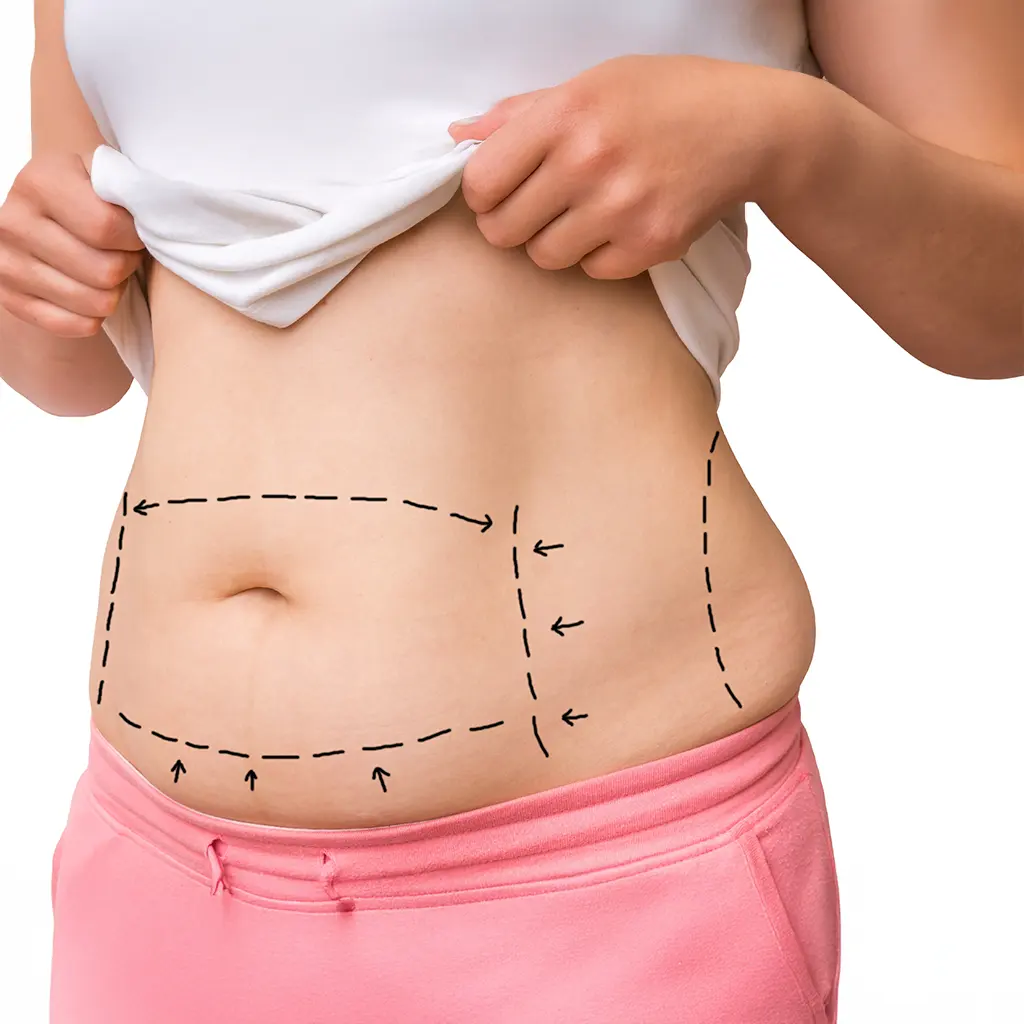
Laxity and sagging in the abdominal area should be considered not only as an aesthetic change but also as a structural transformation. Pregnancy, rapid weight fluctuations, decreased skin elasticity with age, and genetic factors can lead to changes at multiple levels of the abdominal wall. These changes may present as excess skin, fat accumulation, and …
Laxity and sagging in the abdominal area should be considered not only as an aesthetic change but also as a structural transformation. Pregnancy, rapid weight fluctuations, decreased skin elasticity with age, and genetic factors can lead to changes at multiple levels of the abdominal wall. These changes may present as excess skin, fat accumulation, and separation of the abdominal muscles. While diet and exercise are effective in reducing fat and improving muscle strength, they remain limited in cases involving excess skin and muscle separation.
A tummy tuck (abdominoplasty) is a surgical approach that addresses this multi-layered structure as a whole. The goal is not only to remove excess skin but also to reconstruct the abdominal wall and create a more balanced body contour. Therefore, the procedure aims not simply for a “flat abdomen,” but for a functionally and aesthetically more stable structure.
What Is a Tummy Tuck (Abdominoplasty)?
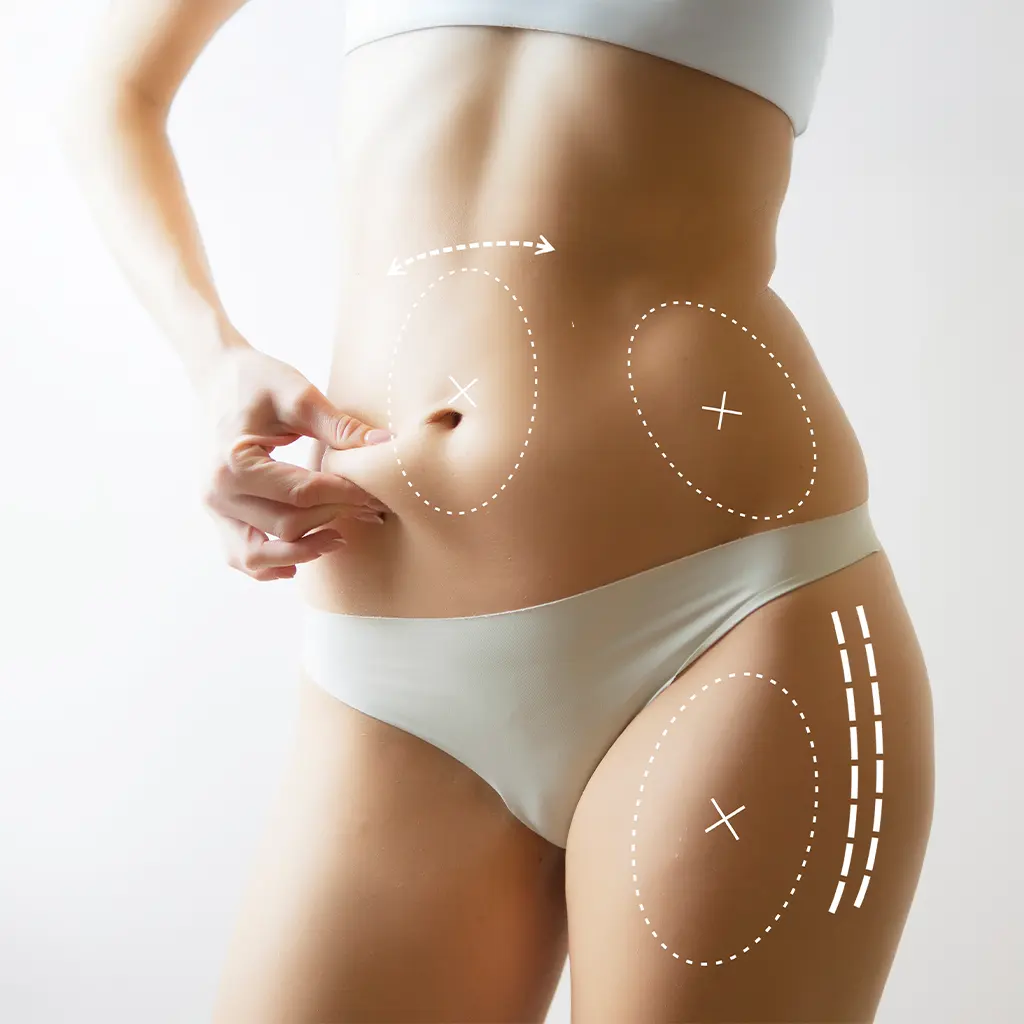
A tummy tuck is based on the removal of excess skin and fat tissue from the abdominal area and the repair of weakened abdominal muscles. During the procedure, an incision is typically made in the lower abdomen, similar to a cesarean scar line. Through this incision, the skin is lifted, the abdominal muscles are brought together and tightened, and the excess skin is removed to reshape the area.
This procedure does not only address surface-level concerns; it also supports the internal structure of the abdominal wall. Muscle separation, known as diastasis recti, is a common condition after pregnancy and may not fully resolve without surgical repair.
A tummy tuck can be performed using different techniques. A mini abdominoplasty is a more limited procedure that focuses only on the lower abdomen. A full abdominoplasty addresses both the upper and lower abdomen, providing a more comprehensive reshaping. The choice of technique depends on the extent of excess skin and the condition of the abdominal muscles.
Why Does Abdominal Sagging Occur?
Abdominal sagging is often the result of prolonged stretching followed by volume loss. During pregnancy, the expanding uterus pushes the abdominal wall forward, forcing the skin and muscles to adapt to this stretch. Similarly, rapid weight gain causes the skin to expand.
During this process:
● Skin elasticity decreases
● Collagen and elastin fibers weaken
● Abdominal muscles may separate
After weight loss or childbirth, volume decreases, but the skin does not always return to its original form. This often leads to noticeable sagging and a sense of looseness, especially in the lower abdomen.
These structural changes are among the main reasons why surgical intervention is considered.
Who Is It Suitable For?
A tummy tuck is suitable for individuals with specific anatomical concerns. Suitability is determined not only by appearance but also by tissue structure and overall health.
In general, suitable candidates have:
● Noticeable excess skin
● Laxity or separation of abdominal muscles
● Contour irregularities that do not improve with diet and exercise
Timing is also important. For individuals planning future pregnancies, surgery is usually postponed, as the abdominal wall may stretch again. Similarly, in cases of ongoing weight fluctuations, achieving weight stability is recommended before surgery.
Smoking is also evaluated, as it can negatively affect wound healing, and cessation is generally advised before planning the procedure.
How Is a Tummy Tuck Planned?
The planning process goes beyond determining the amount of excess skin. All layers of the abdominal wall are evaluated together to define the most appropriate surgical approach.
During planning:
● The extent of excess skin is assessed
● The condition of the abdominal muscles is evaluated
● Fat distribution is analyzed
● The position of the navel is considered
In some patients, liposuction may be combined with a tummy tuck. This combination helps create a more balanced contour not only from the front but also from the sides. However, such additional procedures are planned carefully, considering surgical duration and patient safety.
How Does the Procedure Progress?
A tummy tuck is usually performed under general anesthesia. The duration of the procedure varies depending on the extent of the intervention but typically ranges between 2 and 4 hours.
The surgical process includes:
● Creating an incision in the lower abdomen
● Lifting the skin upward
● Tightening the abdominal muscles
● Removing excess skin
● Repositioning the navel
At the end of the procedure, drains may be placed, and a compression garment is applied. This garment supports the tissues during the healing process.
What Is the Recovery Process Like?
Recovery after a tummy tuck requires patience and regular follow-up. Mild pain, tightness, and limited mobility are normal in the early days. Achieving an upright posture may take a few days.
During recovery:
● Rest is prioritized in the first week
● Gradual return to daily activities begins within 2–3 weeks
● A more active lifestyle becomes possible within 4–6 weeks
Compression garment use typically continues for several weeks. During this time, swelling decreases, and the skin adapts to the new contour. Final results may take several months to become fully visible. Over time, the skin softens, scars fade, and the abdominal contour becomes clearer.
Will There Be Scarring After a Tummy Tuck?
In a tummy tuck procedure, the incision line is usually placed in the lower abdomen, within the underwear line. This positioning helps keep the scar less visible in daily life.
Scarring cannot be completely eliminated. However:
● Proper surgical technique
● Consistent postoperative care
● Natural healing over time
can help reduce the visibility of scars. Initially more noticeable, scars typically become lighter and finer over time.
Are the Results Permanent?
The results of a tummy tuck are generally considered long-lasting. However, they are closely related to lifestyle factors. Weight gain or a new pregnancy may affect the outcome.
The repair of abdominal muscles and removal of excess skin provide a lasting structural change. However, the skin will continue to age naturally over time.
Therefore, maintaining results involves:
● Weight control
● Balanced nutrition
● Regular physical activity
Can a Flat Abdomen Be Achieved with a Tummy Tuck?
A tummy tuck is an effective surgical approach that provides significant improvement in abdominal contour and firmness. With proper planning, excess skin is removed, abdominal muscles are supported, and a tighter, more balanced appearance is achieved. As a result, many patients experience a more stable abdominal structure both aesthetically and functionally.
The quality of the outcome is directly related to existing tissue characteristics. Factors such as:
● Skin elasticity
● Extent of stretch marks
● Pre-existing scar tissue
play a role in shaping the final result. These elements make the outcome unique to each individual.
Nevertheless, the goal of a tummy tuck is to achieve the best possible and most balanced contour within existing conditions. The aim is not merely to create a flat surface, but to provide a natural, proportionate, and sustainable result.
As the healing process progresses, the skin softens, the contour becomes more defined, and the final outcome settles over time. It is important to recognize that this process is shaped not only by the surgical intervention but also by the body’s natural adaptation.
5/5 - (707 votes)
Book a Consultation
It’s easy and free!