The ideal timing for aesthetic surgery after using weight-loss injections is not determined solely by how much time has passed since stopping the medication. More importantly, weight loss should be largely complete, body weight should have stabilised, nutritional status should be sufficient to support surgical healing, and the planned operation should be able to be …
The ideal timing for aesthetic surgery after using weight-loss injections is not determined solely by how much time has passed since stopping the medication. More importantly, weight loss should be largely complete, body weight should have stabilised, nutritional status should be sufficient to support surgical healing, and the planned operation should be able to be performed safely. Whether GLP-1 medications should be continued or temporarily adjusted around the time of surgery is a separate issue and should be planned individually by the surgical and anaesthesia teams.
For this reason, there is no single answer to the question, “How many weeks after stopping weight-loss injections can I have surgery?” Whether weight is still decreasing, the medication dose, gastrointestinal symptoms, adequacy of protein and other nutrients, the degree of excess skin, and the extent of the planned operation should all be assessed together.
Why Is Completion of Weight Loss Important?
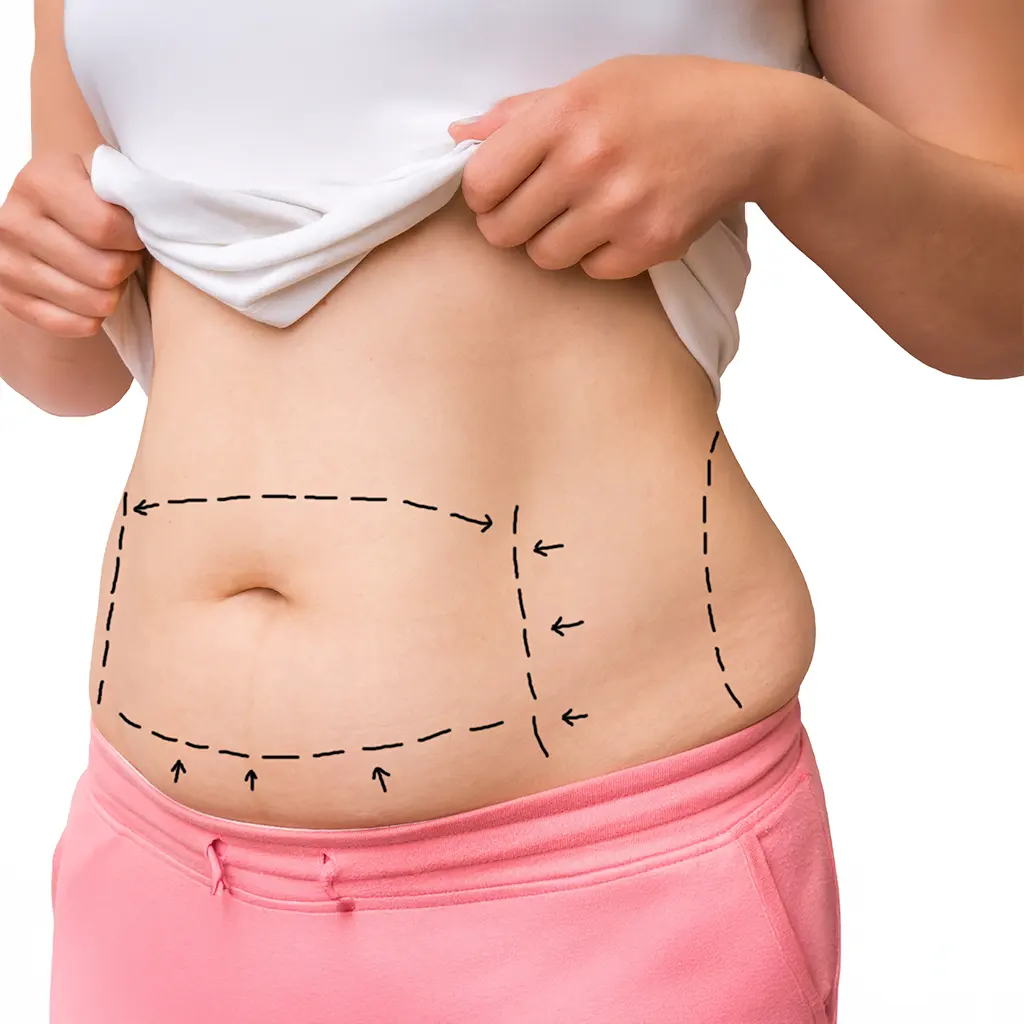
Body contouring procedures such as tummy tuck, breast lift, arm lift, or thigh lift are planned according to the patient’s current body anatomy. If the patient continues to lose a significant amount of weight after surgery, the skin may become loose again and the body contours created through surgery may change.
For example, if a significant amount of additional weight loss occurs after excess skin has been removed during a tummy tuck, new skin laxity may develop in the abdominal area. Similarly, breast volume may decrease further with weight loss, or the contours of the buttocks and thighs may change. For this reason, rather than performing surgery in the middle of an active weight-loss process, it is generally preferable for the patient to approach their target weight and for body composition to become more predictable.
What Does Stable Weight Mean?
Weight stability does not mean that the number on the scale must remain exactly the same every day. Small daily fluctuations are normal. What matters is that the individual is no longer in an active period of significant weight loss.
Remaining within a similar weight range for a period of time helps the surgeon assess the amount of excess skin and localised fat more accurately. It also reduces the likelihood of major body changes continuing after surgery.
For this reason, reaching the target weight alone is not enough; maintaining that weight in a sustainable way is also important for surgical planning.
Do Weight-Loss Injections Need to Be Stopped Before Surgery?
There is no single rule stating that GLP-1 and similar weight-loss medications must automatically be stopped before surgery in every patient. Under current anaesthesia approaches, many patients may continue their medication, while in some situations additional precautions or changes in surgical timing may be required.
The main reason is that these medications can slow gastric emptying. During general anaesthesia, the presence of food in the stomach may increase the risk of aspiration, which means stomach contents entering the airway.
For this reason, the name of the medication, its dose, how long it has been used, and whether symptoms such as nausea, vomiting, constipation, or significant gastric fullness are present should be shared with the anaesthesia team. Patients should not stop the medication on their own.
Can Surgery Be Planned During the Dose-Escalation Phase?
Gastrointestinal side effects may be more noticeable during the initial and dose-escalation phases of weight-loss medications. Slower gastric emptying, nausea, constipation, or a significant reduction in appetite may occur more frequently during this period.
When elective aesthetic surgery is being planned, a period in which the medication dose is still being increased regularly and gastrointestinal symptoms are continuing may not be appropriate. It may be preferable to wait until the treatment reaches a more stable phase and any active symptoms have been assessed.
Why Does Nutritional Status Affect Surgical Timing?
Because weight-loss injections can significantly reduce appetite, some individuals may not consume enough protein and micronutrients while losing weight. Even if the number on the scale appears appropriate, nutritional reserves required for surgical healing may still be insufficient.
Protein is particularly important for wound healing and new tissue formation. Deficiencies in iron, B vitamins, vitamin D, and other nutrients may also need to be assessed before surgery.
Nutritional assessment becomes especially important in patients who have lost a large amount of weight and are planning a tummy tuck, circumferential body lift, or several procedures during the same operation. The aim is not only to reach the target weight, but also to prepare the body for a new healing process.
Should You Wait for the Skin to Settle After Weight Loss?
After weight loss has been completed, the appearance of the skin and soft tissues may continue to change for some time. In some areas, the skin may adapt to the reduced volume to a certain extent, while permanent excess skin may remain in tissues that have lost elasticity.
Monitoring these changes can make it clearer which problems genuinely require surgical intervention. For example, mild laxity may decrease over time, while folding excess skin on the abdomen or significant sagging of the upper arms may not resolve on its own.
For this reason, the timing of surgery should be based not only on weight stability, but also on whether the body contours have had sufficient time to settle.
Does the Type of Surgery Planned Affect Timing?
Yes. The preparation required for limited liposuction is not the same as that required for an extensive tummy tuck or a major operation involving contouring of several areas during the same surgical session.
In procedures involving skin removal, wound healing and tissue blood supply become more important. After major weight loss, if there is sagging in several areas such as the abdomen, breasts, arms, and thighs, it may not always be appropriate to perform all procedures during a single session.
Whether the operations should be divided into stages is determined according to total operating time, general health, risk of blood clots, and the patient’s healing capacity.
How Can You Tell Whether You Are Ready for Aesthetic Surgery?
The appropriate time for aesthetic surgery after weight-loss injections cannot be defined solely by a specific period following the last dose of medication. More important factors include whether weight loss is largely complete, body weight is stable, nutritional intake is adequate, and the body contours are no longer changing significantly.
At the same time, management of GLP-1 or similar medications around the time of surgery should be planned separately for anaesthesia safety. Elective surgery may be postponed if there is active nausea, vomiting, significant gastrointestinal symptoms, or ongoing rapid weight loss.
Ideal timing is determined less by the number on the scale or the date the medication was stopped, and more by completion of weight loss, stabilisation of metabolic and nutritional status, and whether the body is sufficiently prepared for the planned surgery.
5/5 - (800 votes)
Book a Consultation
It’s easy and free!