For many people, hair loss is not merely a change in physical appearance; it may also affect perceived age, self-confidence and everyday social experiences. In some individuals, it begins as gradually progressing hair thinning, while in others it may appear as more noticeable areas of hair loss or a receding hairline. Particularly in cases associated …
For many people, hair loss is not merely a change in physical appearance; it may also affect perceived age, self-confidence and everyday social experiences. In some individuals, it begins as gradually progressing hair thinning, while in others it may appear as more noticeable areas of hair loss or a receding hairline. Particularly in cases associated with genetic predisposition, the process tends to progress over the years, and many people begin researching hair transplantation after considering various supportive methods.
However, hair transplantation is often misunderstood. Some people consider it a procedure that creates entirely new hair, while others assume that it is a suitable solution for everyone. In reality, hair transplantation is a surgical procedure based on redistributing existing hair follicles, and the same plan may not be appropriate for every individual. The success of the operation is closely related not only to the number of grafts transplanted but also to the type of hair loss, donor area capacity, age, genetic progression and expectation management.
Particularly because of social media and before-and-after images, some individuals may expect a completely transformed and dense head of hair within a few months. However, hair transplantation is a biological process, and it takes time for the results to become visible. In addition, the same density, hairline or outcome may not be achieved in every patient. Therefore, the main question when considering hair transplantation should not only be “Should I have a hair transplant?” but also “Am I a suitable candidate, and which approach is more realistic for me?”
What Is Hair Transplantation?
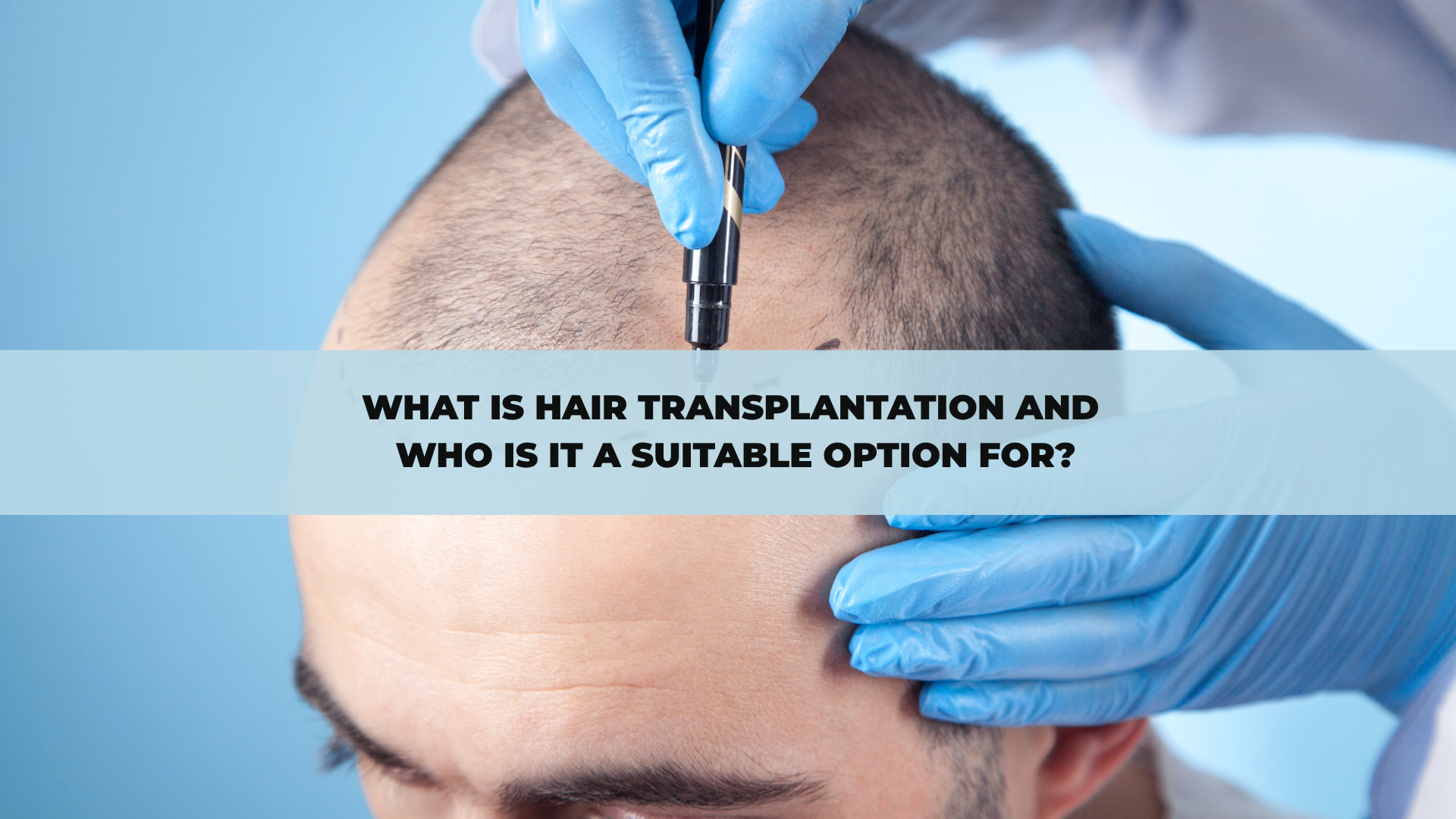
Hair transplantation is the process of transferring hair follicles that are resistant to hair loss, usually from the back or sides of the scalp, to areas where thinning or baldness has developed. There is an important point to understand: Hair transplantation does not produce new hair. The individual’s existing hair follicles are repositioned.
The nape area, which is commonly considered the donor region, is generally regarded as more resistant to genetic hair loss. Hair follicles from this area may be harvested appropriately and transferred to the frontal area, crown or other areas where they are needed.
The primary aim is not simply to fill an empty area. The following factors are evaluated together during planning:
● Hairline design
● Existing hair density
● Facial proportions
● The possibility of future hair loss
● Donor area capacity
● Age and long-term appearance
Particularly when planning treatment at a young age, it is important to consider not only the current area of hair loss but also the possibility of further hair loss in later years.
Why Does Hair Loss Occur?
Hair loss does not have a single cause. The most common reason is androgenetic alopecia associated with genetic predisposition. However, hormonal changes, stress, nutritional deficiencies and certain health conditions may also affect hair density.
Common causes may include:
● Genetic hair loss
● Hormonal changes
● Iron or vitamin deficiencies
● Stress and lifestyle factors
● Certain medications
● Thyroid disorders
● Autoimmune conditions
For this reason, hair transplantation is not planned immediately for everyone experiencing hair loss. The cause of the hair loss and whether it is still active should first be evaluated.
Different approaches may be considered, particularly in cases of temporary hair loss or conditions that may benefit from medical treatment.
Does Every Type of Hair Loss Require Hair Transplantation?
The brief answer is no.
Some individuals may consider hair transplantation immediately because of a slight change in the hairline, while others may evaluate different options even when they have more advanced areas of hair loss.
Hair transplantation is more commonly considered in situations where:
● Permanent areas of hair loss have developed
● Hair loss has stabilised to a certain extent
● The donor area is sufficient
● The individual has realistic expectations
However, medical treatments, approaches aimed at slowing hair loss or supportive procedures may be prioritised for some individuals. Planning a hair transplant too quickly while hair loss is actively progressing may create an unbalanced appearance in the long term. Therefore, the aim is not only to fill the existing area but also to plan with the future pattern of hair loss in mind.
Who May Be a Suitable Candidate for Hair Transplantation?
One of the most important aspects of hair transplantation is assessing candidate suitability. This is because the same density and technique cannot be planned for every individual. The following criteria are generally considered during the assessment:
Donor Area Quality
This is one of the most important factors.
Hair density in the nape area, follicle quality and hair shaft thickness may affect the outcome.
Expectations may need to be more limited in individuals with insufficient donor capacity.
Hair Loss Pattern
The extent of hair loss is assessed, particularly in male-pattern hair loss.
The frontal hairline, crown area and overall density are planned together.
Age
An aggressive hairline design at a very young age may not always be appropriate.
This is because hair loss may continue and new areas of thinning may develop in the future.
General Health
Certain health conditions may require additional assessment before the procedure.
Expectation Management
Although hair transplantation may provide significant improvement, the same density may not be achieved in everyone. In particular, the expectation of fully restoring the dense hair of youth may not be realistic for every anatomical structure.
What Techniques Are Used in Hair Transplantation?
Some of the most commonly discussed techniques today are FUE and DHI. However, the important point is not the name of the technique but appropriate planning and application.
FUE (Follicular Unit Extraction)
FUE is one of the methods based on harvesting and transferring individual hair follicles. It may often be used when planning treatment for larger areas.
DHI (Direct Hair Implantation)
DHI may be considered in certain cases to provide more controlled planning of the implantation sites. However, there is no single technique that is appropriate for every individual. Although some methods may be presented on social media as the “best technique,” the choice actually varies according to the person. What matters is not the popularity of the technique’s name, but determining a strategy that is appropriate for the individual’s hair characteristics.
How Does the Recovery Process Progress After Hair Transplantation?
Crusting, tenderness and temporary redness may occur during the first few days after hair transplantation.
During the first few weeks, the following may become important:
● Gentle washing
● Protection from trauma
● Avoiding sun exposure
● Refraining from intense exercise
One of the situations that surprises many patients is the “shock loss” phase. Some of the transplanted hairs may shed during the first few weeks or months. This usually does not indicate permanent loss and may be a natural part of the biological growth cycle.
The general timeline often progresses as follows:
First Month
Healing and crusting period.
2–4 Months
Temporary shedding and the beginning of early growth.
4–8 Months
New hairs become more visible.
8–12 Months and Beyond
Density and the final appearance can be assessed more clearly.
For this reason, making definitive judgements by looking in the mirror during the early period may often be misleading.
Can Hair Transplantation Also Be Suitable for Women?
Although hair transplantation is often associated with men, some women may also be suitable candidates.
It may particularly be considered in individuals with:
● Localised thinning
● A receding hairline
● Areas of hair loss caused by trauma or scarring
However, because female-pattern hair loss may progress differently from male-pattern hair loss, a detailed assessment is important. In some cases, medical treatments may be considered first.
Why Are Realistic Expectations Important?
A significant part of satisfaction with hair transplantation is related to having appropriate expectations. The dense outcomes seen on social media may not develop in the same way for everyone.
Factors that may affect the outcome include:
● Donor area density
● Hair thickness
● Degree of hair loss
● Age
● Skin characteristics
● Individual healing biology
For this reason, it may not be realistic to view hair transplantation as a “complete return to the previous appearance in a single session.” Some individuals may require a second session, or expectations regarding density may need to be more conservative.
Hair Transplantation Is Not the Same Solution for Everyone
Hair transplantation may be one of the effective options for restoring hair density and framing the face in suitable candidates. However, the procedure is not planned in the same way for everyone, and not every type of hair loss directly requires transplantation. Donor area capacity, the type of hair loss, age and long-term planning should all be evaluated together.
A successful hair transplantation approach depends not only on the number of grafts transplanted but also on creating a natural hairline, maintaining facial harmony and considering the possibility of future hair loss. Realistic expectations and personalised planning may be decisive in achieving a more balanced and natural appearance.
5/5 - (742 votes)
Book a Consultation
It’s easy and free!