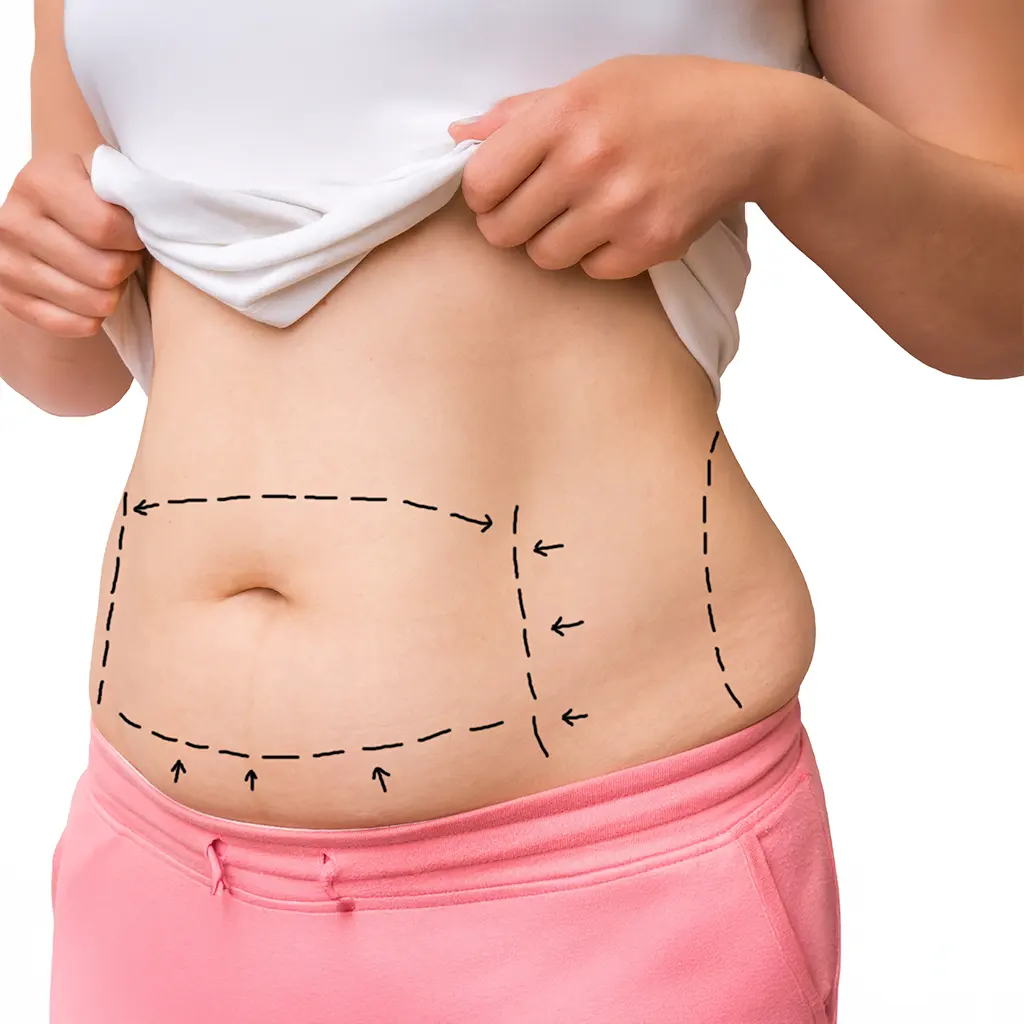
Lower abdominal sagging may develop as a result of skin laxity, localised fat accumulation, post-pregnancy changes in the abdominal wall, and major weight loss, either individually or in combination. How it should be corrected depends on the underlying cause of the sagging. If the main problem is excess fat, liposuction may be sufficient, while surgical …

Lower abdominal sagging may develop as a result of skin laxity, localised fat accumulation, post-pregnancy changes in the abdominal wall, and major weight loss, either individually or in combination. How it should be corrected depends on the underlying cause of the sagging. If the main problem is excess fat, liposuction may be sufficient, while surgical options such as a mini tummy tuck or full tummy tuck may be considered when there is significant excess skin. If muscle separation is also present, treating only the fat or skin may not be sufficient.
For this reason, it is not appropriate to select a single procedure based only on the appearance of a lower abdominal bulge or fold. Skin quality, the thickness of the fat layer, laxity above the belly button, and the condition of the abdominal muscles should all be assessed together.
Why Does Lower Abdominal Sagging Occur?
The skin of the lower abdomen may expand over time because of pregnancy, weight gain and loss, and ageing. When the skin loses its ability to contract again, laxity or a downward-folding appearance may develop in the lower abdomen.
During pregnancy in particular, not only the skin but the entire abdominal wall is stretched. Even if fat volume decreases after childbirth, the skin and connective tissues may not completely return to their pre-pregnancy firmness.
A similar situation may occur after major weight loss. Although overall body volume decreases, previously stretched skin may not be able to adapt to the new volume.
Is the Problem in the Lower Abdomen Excess Fat or Excess Skin?
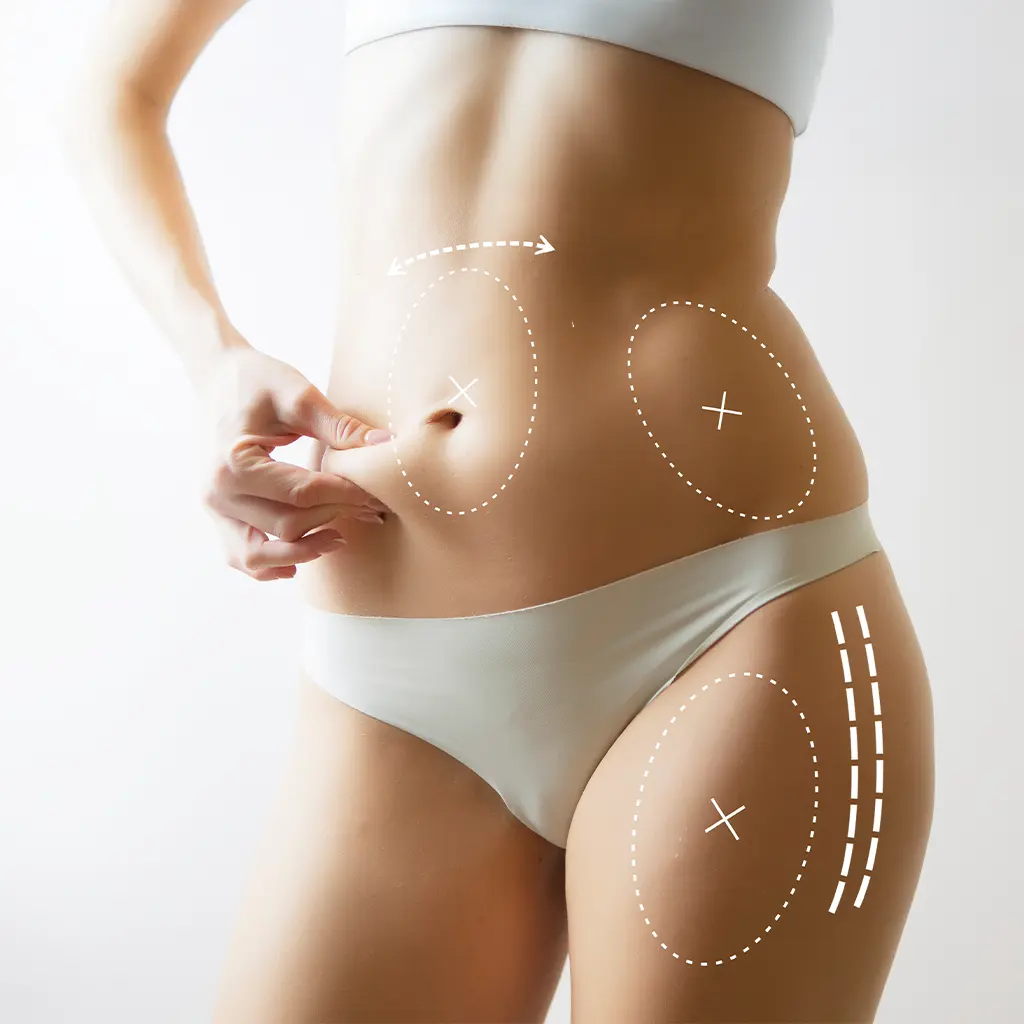
This distinction is one of the most important factors in determining treatment. When excess fat is the main problem, the lower abdomen generally appears fuller and softer. If skin quality is adequate, the skin may retract to some extent when the volume in the area is reduced.
When excess skin is present, the tissues may appear looser, wrinkled, or folded. Skin folding may become more noticeable when bending or sitting.
Most patients do not have only one problem. Localised fat and skin laxity may be present at the same time, and the treatment plan needs to address these two components separately.
Does Separation of the Abdominal Muscles Affect the Appearance of the Lower Abdomen?
Yes. Particularly after pregnancy, separation of the abdominal muscles along the midline, known as rectus diastasis, may contribute to forward protrusion of the abdominal wall.
In this situation, a patient may have difficulty achieving a flatter abdomen despite losing weight. This is because the problem is not limited to the subcutaneous fat tissue; the internal support of the abdominal wall has also weakened. If muscle separation is present, liposuction does not correct this structural problem. In suitable patients, muscle repair may need to be considered during tummy tuck surgery.
Can Liposuction Correct Lower Abdominal Sagging?
The primary purpose of liposuction is to reduce fat tissue. If skin elasticity is good and the main problem is localised fat accumulation, it may create a noticeable improvement in the lower abdominal contour.
However, liposuction does not physically remove excess skin. If the skin is already loose, reducing the underlying fat volume may even make the sagging more visible. For this reason, simply having a “lower abdominal bulge” is not sufficient justification for liposuction. The first step is to assess whether the skin is capable of adapting to the reduced volume.
Can Tightening Treatments Be Used for Mild Skin Laxity?
Energy-based tissue tightening methods may be considered in some patients with mild to moderate skin laxity. Radiofrequency technologies may support contraction of collagen-containing tissues in suitable patients and contribute to better skin adaptation.
These methods may be considered particularly in combination with liposuction. As fat is reduced, the aim is to help the remaining tissues adapt more effectively to the new contour.
However, if there is a significant amount of excess skin that folds or hangs downward in the lower abdomen, energy-based methods should not be expected to create the same degree of change as lifting surgery.
When May a Mini Tummy Tuck Be Suitable?
A mini tummy tuck may be considered in some patients whose excess skin is largely limited to the area below the belly button. In this approach, excess skin in the lower abdomen is removed and limited abdominal wall adjustments may be performed when necessary.
However, if there is also significant laxity above the belly button, a mini tummy tuck may not correct the entire problem. It should therefore not be chosen simply because it is a smaller operation. Suitability depends on exactly where the excess skin is located.
When May a Full Tummy Tuck Be Required?
If skin laxity extends across both the lower and upper abdomen, if there is significant sagging around the belly button, or if separation of the abdominal muscles is also present, a full tummy tuck may be a more comprehensive option.
During this operation, excess skin is removed, the abdominal tissues are reshaped, and muscle separation may be repaired in suitable patients. If localised fat deposits are also present, liposuction may be added to the surgical plan.
For this reason, tummy tuck and liposuction do not necessarily have to be alternatives to one another. Because they address different anatomical problems, they may be used together in some patients.
Can Weight Loss Eliminate Lower Abdominal Sagging?
Weight loss may reduce fat tissue, but it does not remove excess skin. As a person approaches their target weight, the fat layer in the lower abdomen may become thinner while loose skin becomes more noticeable.
This is particularly common after pregnancy or major weight loss. Losing more weight does not always mean achieving a flatter abdomen. For this reason, once body weight has stabilised, it becomes easier to determine whether the remaining problem is related to fat, skin, or the abdominal muscles.
How Is the Right Approach for Lower Abdominal Sagging Determined?
Appropriate planning begins by identifying which tissues are responsible for the appearance of the lower abdomen. If localised fat is the dominant problem and skin quality is sufficient, liposuction may be considered. Tissue-tightening methods may provide additional support in cases of mild laxity. When significant excess skin is present, surgical options such as a mini or full tummy tuck may become more appropriate.
Muscle separation, laxity above the belly button, previous pregnancies, weight changes, and future pregnancy plans may also affect the decision.
The aim is not to apply the same procedure to every lower abdomen, but to determine how much the sagging is related to fat, skin, and the abdominal wall, and to choose an approach accordingly.
5/5 - (606 votes)
Book a Consultation
It’s easy and free!