Rhinoplasty is not simply an operation that changes the size or shape of the nose. Because the nose is located at the centre of the face, changes to the height of the nasal bridge, tip structure, length, or width may also affect how the eyes, lips, cheekbones, and chin are perceived. The aim of a …

Rhinoplasty is not simply an operation that changes the size or shape of the nose. Because the nose is located at the centre of the face, changes to the height of the nasal bridge, tip structure, length, or width may also affect how the eyes, lips, cheekbones, and chin are perceived. The aim of a well-planned rhinoplasty is not to make the nose perfect in isolation, but to create a more balanced and natural relationship with the individual’s facial structure.
Why Is the Nose So Important in the Overall Perception of the Face?
Located at the centre of the face, the nose is one of the main reference points in both frontal and profile views. The height of the nasal bridge, projection of the nasal tip, nasolabial angle, width of the nasal base, and position of the nose along the facial midline all influence overall facial proportions.
A prominent nasal hump, a drooping nasal tip, or a nose that appears long in relation to the rest of the face may draw attention towards this area. Bringing the nose into greater balance with the face may allow other facial features to become more noticeable.
However, this does not mean that every patient should have a small or upturned nose. In scientific assessment, the aim is not to apply a standard nose shape, but to plan the nose in harmony with the individual’s face, characteristic features, and anatomy.
How Does Rhinoplasty Change the Profile View?
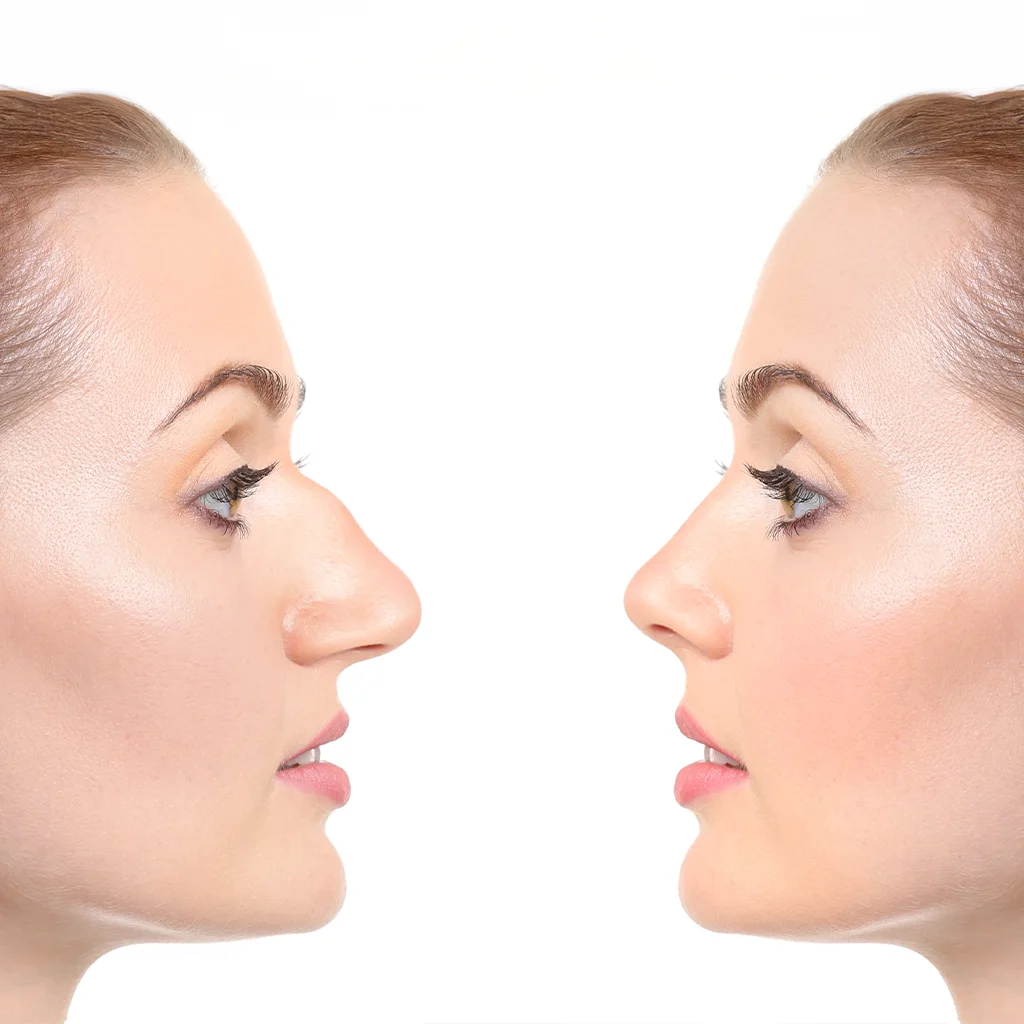
When assessing the profile, the nose is examined together with the forehead, lips, and chin. Reducing a hump on the nasal bridge, adjusting the position of the nasal tip, or changing the length of the nose may create a more balanced facial profile.
However, in some individuals, the reason the nose appears large may not be related to the nose alone. A recessed or small chin may make the nose appear more prominent than it actually is. For this reason, the surgeon should evaluate the relationship between the nose and chin rather than focusing solely on the nose.
Assessing the relationships between the nose and forehead, lips, and chin during rhinoplasty planning demonstrates why the nose should be considered together with the surrounding facial structures.
Which Changes May Be Noticeable from the Front?
From the front, the width of the nose, deviation from the midline, shape of the nasal tip, and balance of the nostrils are particularly noticeable. A crooked nose may create the impression that the entire face is asymmetrical. Bringing the nasal bridge closer to the midline or adjusting its width according to facial proportions may create a more balanced frontal appearance.
However, the human face is naturally not completely symmetrical. Pre-existing differences between the eyebrows, eyes, cheekbones, chin, and lips will remain after rhinoplasty. In fact, when the nose becomes straighter, existing facial asymmetries may become more noticeable.
For this reason, it is important to discuss facial asymmetry openly with the patient before surgery and incorporate it into surgical planning.
Does the Nasal Tip Affect Facial Expression?
A nasal tip that is drooping, wide, prominent, or excessively projected may influence how facial expression is perceived. Controlled reshaping of the nasal tip may alter its relationship with the upper lip and improve profile balance.
Excessive elevation or narrowing of the nasal tip, however, may create an unnatural appearance, make the nostrils overly visible, or alter the individual character of the face.
The goal is therefore not to make the nose as small as possible, but to create a shape that is harmonious with the face while preserving adequate structural support. Medical sources also note that an excessively upturned nasal tip may create an unnatural appearance.
Can a Small Change Make a Big Difference to the Face?
Because the nose is located at the centre of the face, even changes measured in millimetres may affect the overall appearance. A limited adjustment to the nasal bridge, slight support of the tip, or controlled reduction in width may help the face appear more balanced.
However, a greater degree of change does not always mean a better appearance. Excessive reduction of the nose may disrupt harmony with the rest of the face and may affect respiratory function.
In rhinoplasty, aesthetic goals should be balanced with preservation of the structural support and airway function of the nose. If functional problems are present, the septum, nasal valves, and internal airway structures should also be evaluated.
Is There a Single Nose Shape That Suits Every Face?
There is no ideal nose shape that can be applied to every face. A nose admired on social media or in another patient’s photograph may not look the same on someone else because of differences in bone structure, skin thickness, and facial proportions.
Thick skin may limit the visibility of fine details at the nasal tip, while thin skin may make small irregularities more noticeable. Existing cartilage support, bone width, facial length, and chin structure may also alter the surgical plan.
Reference photographs may therefore be used to communicate expectations, but the surgical plan should be created according to the individual’s own anatomy.
When Can the Final Appearance Be Assessed?
During the first few weeks after rhinoplasty, swelling, bruising, and temporary asymmetries may occur. As swelling decreases, the nasal contours become more defined; however, swelling at the nasal tip may take longer to resolve completely. The contour of the nose gradually becomes clearer throughout the healing period.
For this reason, the effect of surgery on the face should not be assessed definitively during the early postoperative period. The rate of recovery may vary according to the technique used, skin thickness, the extent of the changes performed, and the individual’s tissue-healing characteristics.
How Is a Nose That Harmonises with the Face Planned?
A nose that harmonises with the face appears balanced with the other facial features rather than standing out as a single dominant characteristic. To achieve this, the surgeon should assess the nose from the front, profile, oblique angles, and during facial movement. Breathing concerns, previous trauma, previous operations, and the patient’s expectations should also be included in the planning process.
The aim of rhinoplasty is not to make the patient resemble someone else, but to address the features that concern them within safe limits while preserving their individual facial characteristics. A detailed examination, realistic expectations, and personalised surgical planning may help create a more natural relationship between the nose and the overall appearance of the face.
5/5 - (571 votes)
Book a Consultation
It’s easy and free!